



- Construction Market Trends
- |
- Commercial Market Trends
- |
- Knowledge Base
- |
- Construction Ideas
Smart Budgeting for Wisconsin Commercial Construction
What is Smart Rates? Riley Construction’s Estimating Process Explained
Commercial construction in Wisconsin remains healthy, boosted by data center and manufacturing growth. However, companies face headwinds from tariffs, material costs, and economic uncertainty.[1]
That makes accurate budgets more critical than ever. In an industry with tight margins, long timelines, and many stakeholders, small errors can turn into major problems.
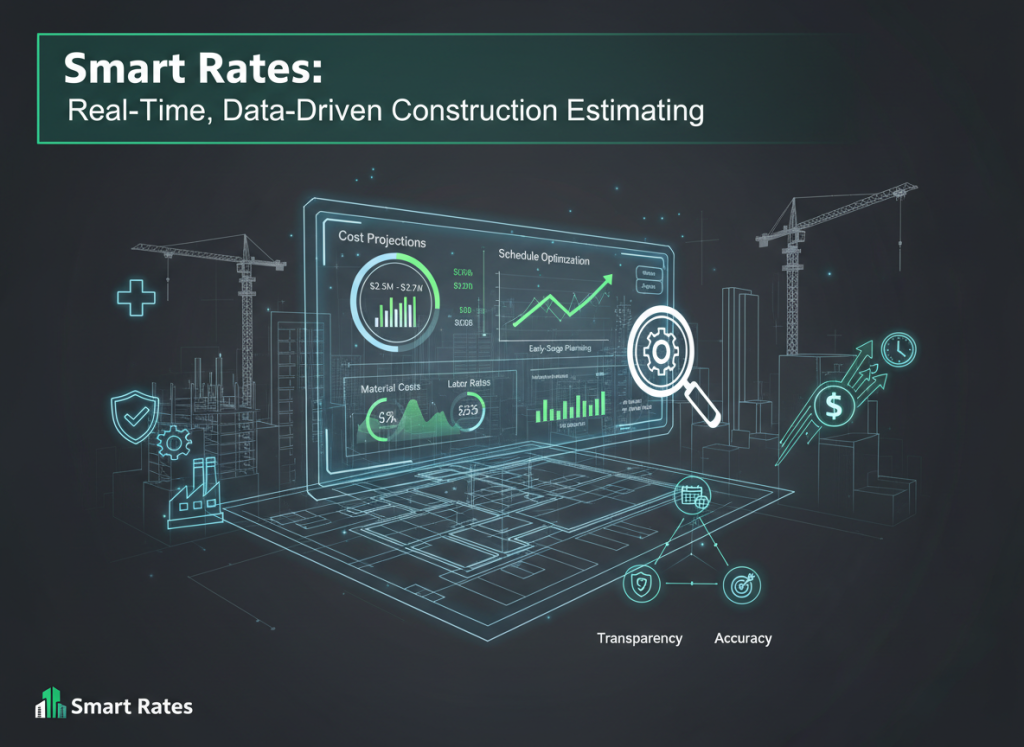
That’s why Riley Construction developed Smart Rates, a proprietary budgeting tool designed to deliver more accurate, real-time construction estimates.
What is the Smart Rates Budgeting Method?
Many early stage construction budgets are built using traditional cost-per-square-foot comparisons from previous projects. But history doesn’t tell the full picture of today’s unpredictable market conditions. Riley Construction’s Smart Rates
estimating tool provides a more thorough representation of project costs earlier in the planning process.
Why is it necessary? Today, commercial construction projects average cost-runs of 10%-30%, depending on the scale and complexity of the project. A recent McKinsey study found that large-scale projects have exceeded budgets by as much as 80%.[2]
What causes construction budget overages?
Projects typically go over budget due to scope creep and often because early estimates miss important details. There are also a number of unforeseen site conditions that may trigger costly change orders. This can all lead to cost-cutting mid-project and potential lost profits.
Why is Smart Rates Estimating Different?
Every project has many specific requirements that directly impact outcomes. Without incorporating these variables during preconstruction, estimates can miss the mark, often leading to late-stage value engineering, scope reductions, or difficult financial decisions.
Instead of relying solely on just on traditional historical averages, Smart Rates reflect:
- Unique design elements and project specifications
- Current market pricing and inflation
- Project-specific design elements
- Labor and production rates
- Material costs and quantities
- Equipment requirements and costs
This approach allows owners to make informed decisions with greater financial confidence, long before final design documents are complete.
How Does Industry Impact Construction Estimating and Costs?
Riley Construction uses Smart Rates to estimate in many industries, from healthcare to manufacturing. Each has its own unique set of regulations and space challenges that can significantly impact cost.
With healthcare construction budgets, for example, 35%-50% of costs often go to Mechanical Engineering and Plumbing systems, stringent HVAC and infection control regulatory compliance and equipment needs. A behavioral clinic, in contrast, would require modified hardware and alarm systems, as well as impact- and tamper-resistant glazing and lighting.
Manufacturing plant construction estimates vary significantly by industry due to distinct regulatory and operational requirements that impact design, materials, and installation standards. For example, a food processing plant prioritizes compliance with food safety standards such as FDA or USDA guidelines, which drive specific material and layout decisions. Smart Rates ensures all these factors are considered early during estimating, helping organizations identify and reduce risks before they become an issue.
Want to learn more about Riley’s approach to project planning?
Riley’s goal when estimating is to provide transparency throughout the whole budgeting process, helping clients understand costs for every aspect of a project. When construction budgets are grounded in real-time data and project-specific detail, clients can be confident they are getting the most accurate estimate possible.
Reach out to Riley’s V.P. of Preconstruction, John Delavan at JohnD@rileycon.com for more information and to start a conversation about your next project.
Categories:
