



- Healthcare Construction Market Trends
- |
- Knowledge Base
- |
- Construction Ideas
Four Questions to Ask When Repurposing a Healthcare Space
KEY TAKEAWAYS
- Repurposing existing space can cut initial project costs by up to 40% vs. new construction.
- Space design directly affects clinical outcomes – infection control, staff response times, and patient experience.
- The best projects plan for the next 20 years, not just today’s need.
Repurposing an existing, functional healthcare space is often faster and more cost-effective than building new and can reduce initial project costs up to 40%.1
U.S. healthcare systems are under growing pressure to do more with what they have. Today, renovations now account for 65% of all healthcare project activity.2 In Wisconsin and northern Illinois, we’re seeing that same momentum from a number of our healthcare-built environment partner networks.
Yet repurposing comes with its own set of challenges, especially when the space needs to remain operational during construction. Before you move forward, here are four critical questions your team needs to answer.
How does this space currently function, and how will the transition affect the people in it?
Repurposing a space in an active healthcare environment means disrupting existing workflows, at least temporarily. Whether you’re converting a conference suite into an imaging area, turning a traditional nursing station into a decentralized care pod, or transforming an underutilized administrative wing into a clinical space, the ripple effects on staff movement, care delivery support operations, and patient flow can be significant.
Ask your construction partner early:
- Is there a need to phase the work?
- What interim workflows need to be considered?
- Are there infrastructure or life-safety considerations that will affect surrounding departments?
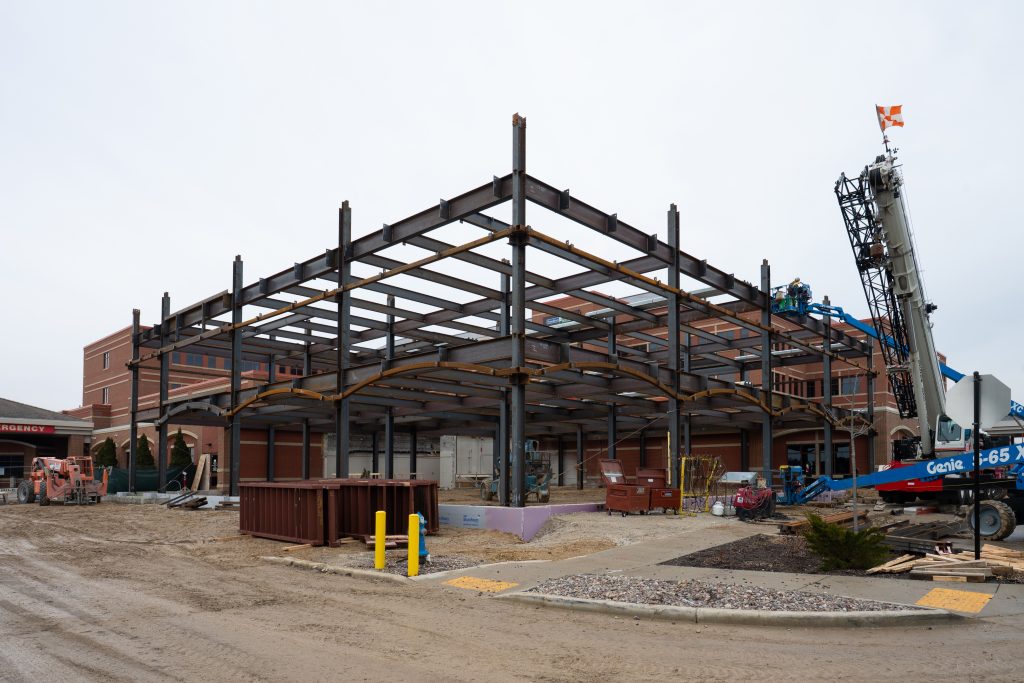
At Riley, we use a planning approach that works backward from key milestones to anticipate these considerations, and suggest starting that conversation at least 20 weeks out to stay ahead of material lead times and sequencing decisions.
Are we reacting to today’s need, or building something that anticipates the needs of the next 20 years?
Repurposing a functional space can be a smart capital strategy if the decision is grounded in a long-term facilities plan. Healthcare organizations operating under financial pressure and declining reimbursements need every capital dollar to carry weight. A project that solves an immediate space problem but doesn’t align with a broader master plan can end up costing more in the long run.
Questions to ask long before designs are finalized include:
- Does the existing mechanical, electrical, and plumbing infrastructure support the anticipated demand of the intended new use?
- Will the structural load capacities accommodate emerging technology associated with new imaging or surgical equipment?
- Will the design adapt to modular room configurations and flexible modality application that allow the space to evolve without major reconstruction?
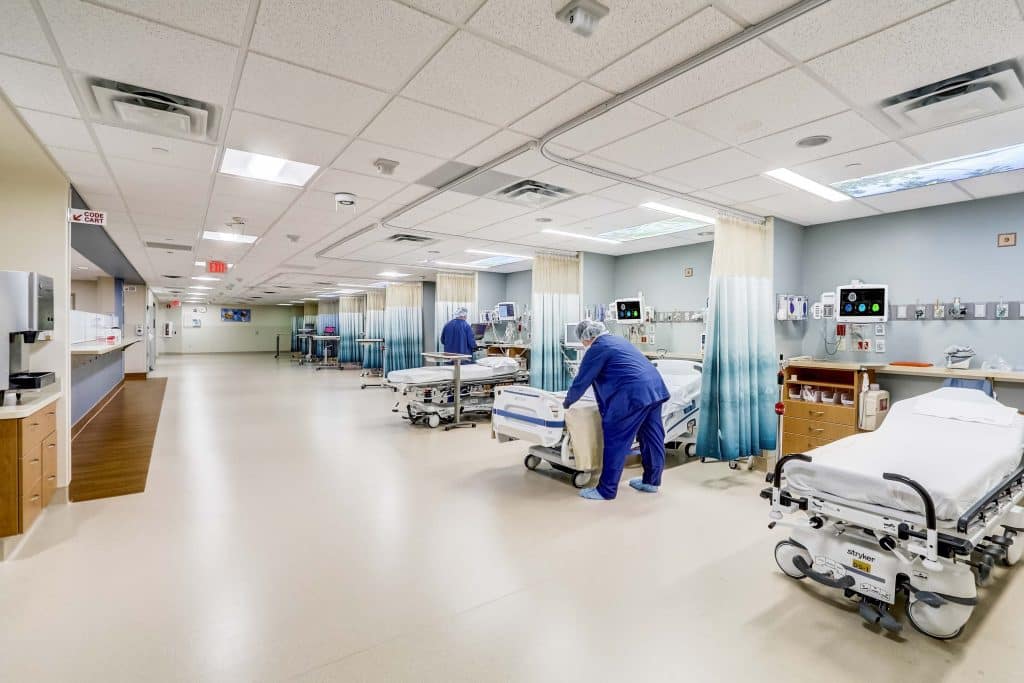
Will this space improve the quality of care delivered?
The physical environment has a measurable impact on clinical outcomes.3 Space planning decisions affect infection control, medication error rates, staff response times, and the ability to adopt new care protocols and technologies. If you’re repurposing a space to support a new service line, such as behavioral health or ambulatory surgery, the design needs to reflect how care is actually delivered in that setting.
At Riley, our field leaders make it a priority to work directly with department heads and care teams throughout a project, not just during the planning phase.
Understanding how staff navigate from the supply room to the patient room, or how a care team coordinates around a shared workstation, helps shape construction and layout decisions.[CH1]
What will this feel like to the person receiving care?
Natural light, acoustic comfort, intuitive wayfinding, and spaces that feel less clinical and more human all contribute to how patients perceive and respond to care. While repurposing needs to address both function and cost, a space that works well operationally but falls flat with patients, families and staff is not a total success.
To keep patient experience at the forefront of design and construction decisions, ask:
- Does the new layout support privacy and dignity?
- Is there a welcoming and inclusive environment for families?
- Does the flow of the space reduce anxiety rather than add to it?
Repurposing functional space in a healthcare setting is one of the most complex and rewarding types of work we do at Riley. Done well, it extends the life of your facility, improves patient care delivery, and serves your community without the cost or timeline of ground-up construction. But it requires the right questions upfront, and the right partner to help you answer them.
To discuss your next healthcare construction project, contact Chris Meier at chrism@rileycon.com or 262-620-3629.
[CH1]please review this change. I think this makes the paragraph clearer, which is the area where Chris had a question.
Categories:
